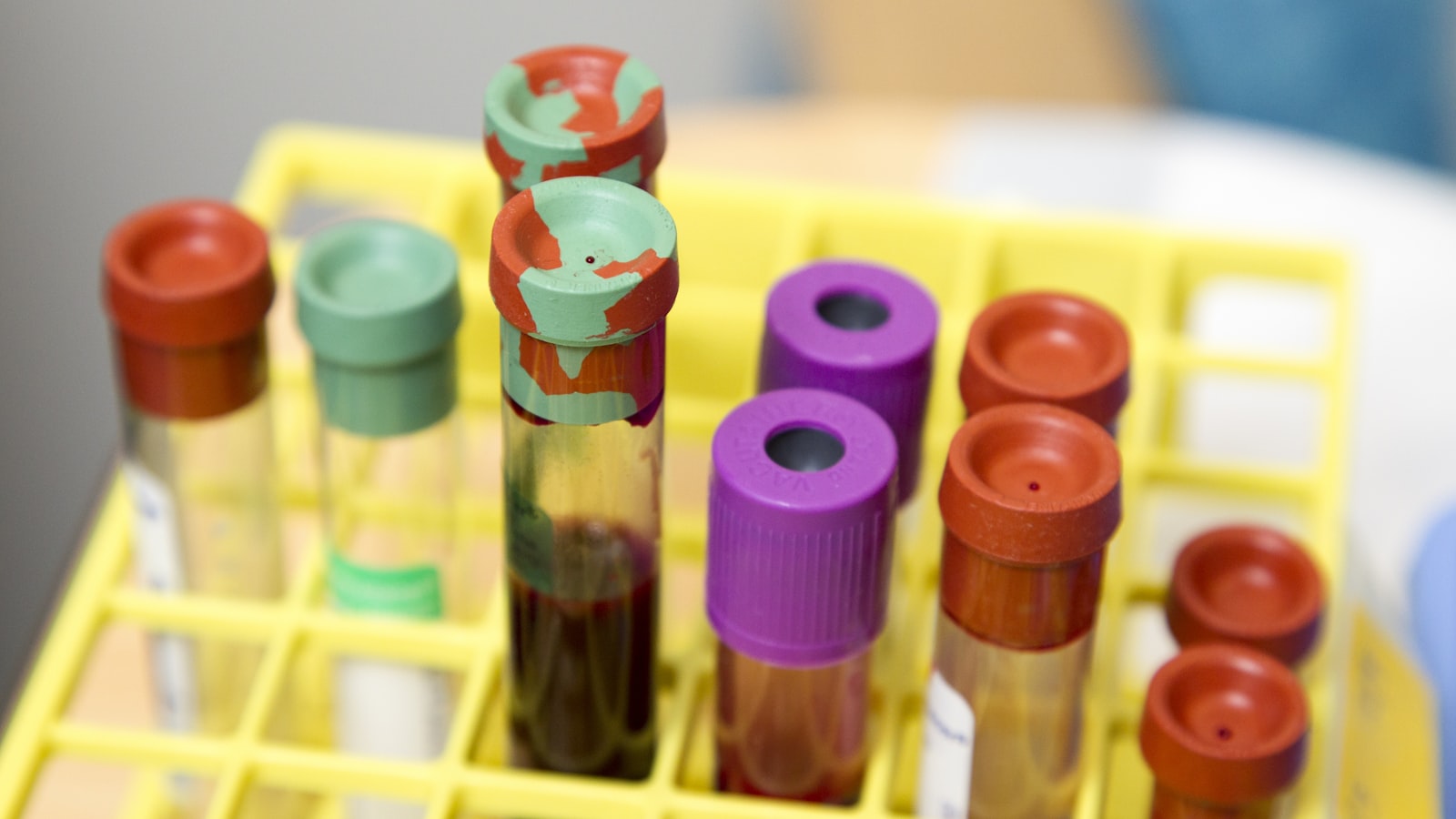
Somewhere before JenSkin existed, I ordered the tests myself.
Not all of them. Not a coordinated panel. Just what my primary care doctor's office would run when I asked. A hormone thing. A vitamin D. A B12 during a stretch of feeling tired.
I remember sitting in the parking lot after the last one, opening the PDF on my phone. Twenty numbers with little arrows next to a few of them, and next to each arrow the phrase below normal or within reference range. No context, no next step. My doctor's office called two days later and said, "You're fine — vitamin D is a little low, take some D3, we'll retest in a year." That was the entire conversation.
I sat with that PDF for a long time.
Because here's what I actually wanted to know. What does below normal mean for my skin? What does a vitamin D of 24 feel like — is that why my skin has been dry? What does it do to my collagen? Is 24 a big deal or a small deal for a woman my age? What should I actually eat, and how much D3 for how long, and what would count as it working?
None of that was in the report. Nobody was going to explain it. And I realized: it wasn't the lab test I needed. It was the translation.
The gap between a number and knowing what to do.
That gap is where JenSkin lives.
Any woman reading this can, tomorrow, get most of the nine biomarkers on our panel run at a normal doctor's office. hsCRP. HbA1c. Fasting glucose. Fasting insulin. Vitamin D. Oxidized LDL. Zinc. Estradiol. Omega-3. None of them are exotic. Some cost less than ten dollars wholesale. Most doctors will run them if you ask.
What you'll get back is a PDF with numbers and reference ranges that were designed for one specific job — catching disease.
The reference ranges in a standard blood panel exist to tell your doctor whether something is medically wrong. They are set wide on purpose — because "normal" in medicine means "not currently sick." An HbA1c of 5.9 is normal. A vitamin D of 32 is normal. A zinc at the low end of the range is normal. If you had any of those and asked your doctor, they'd tell you you're fine.
And medically, they are right.
Skin-wise, none of those numbers are fine at all. An HbA1c of 5.9 is quietly glycating collagen every day. A vitamin D of 32 is well below what the skin-DNA-repair literature suggests you need. A zinc sitting at the low end of "normal" is where I start seeing dry, flat, slow-to-heal skin in customers before we ever look at another number.
But your doctor's office isn't going to tell you any of that. It isn't their job. Their job is to keep you not sick. Not to keep your skin metabolically resourced.
The numbers were never the point. The interpretation was.
The report is the product.
That's what I couldn't get from a la carte tests. Not more markers. A translation.
When I built JenSkin, the actual problem I was solving wasn't "how do we run some blood work." Any lab does that. The problem was: how do we take a woman's nine biomarkers and translate them into a report that reads like her most patient, science-fluent friend sat down with her and said — okay, here's what your body is actually up to, in plain English, and here's the very small handful of things worth doing about it, and here's what to ignore.
The nine markers are the raw material.
The reference ranges we built — tighter than clinical normal, mapped to the skin literature — are the lens.
The report is what does the work.
And every woman who takes the panel gets a real conversation with our research team walking through hers. Because — and this is the thing I most wish someone had done for me in that parking lot — reading your own blood work with a person is a completely different experience than reading it alone.
What I keep telling people.
If you have a friendly primary care physician, or a functional medicine doctor, and you have the appetite for it, you can absolutely order some version of these tests. I want to be honest about that. A few of our customers have already done it before finding us.
Almost all of them tell me the same thing: they got the numbers and nothing changed.
The numbers were never the point. The interpretation was.
The reason JenSkin exists is not that we invented a lab test. It's that we sat down and built the piece nobody was building for women — the piece that turns nine numbers into an answer to the question you actually had when you walked in.
Which was, for me, and probably for you:
What is my body trying to tell me about my skin, and what am I supposed to do with it.
That's the whole thing. That's what I couldn't buy anywhere else. That's what I built.