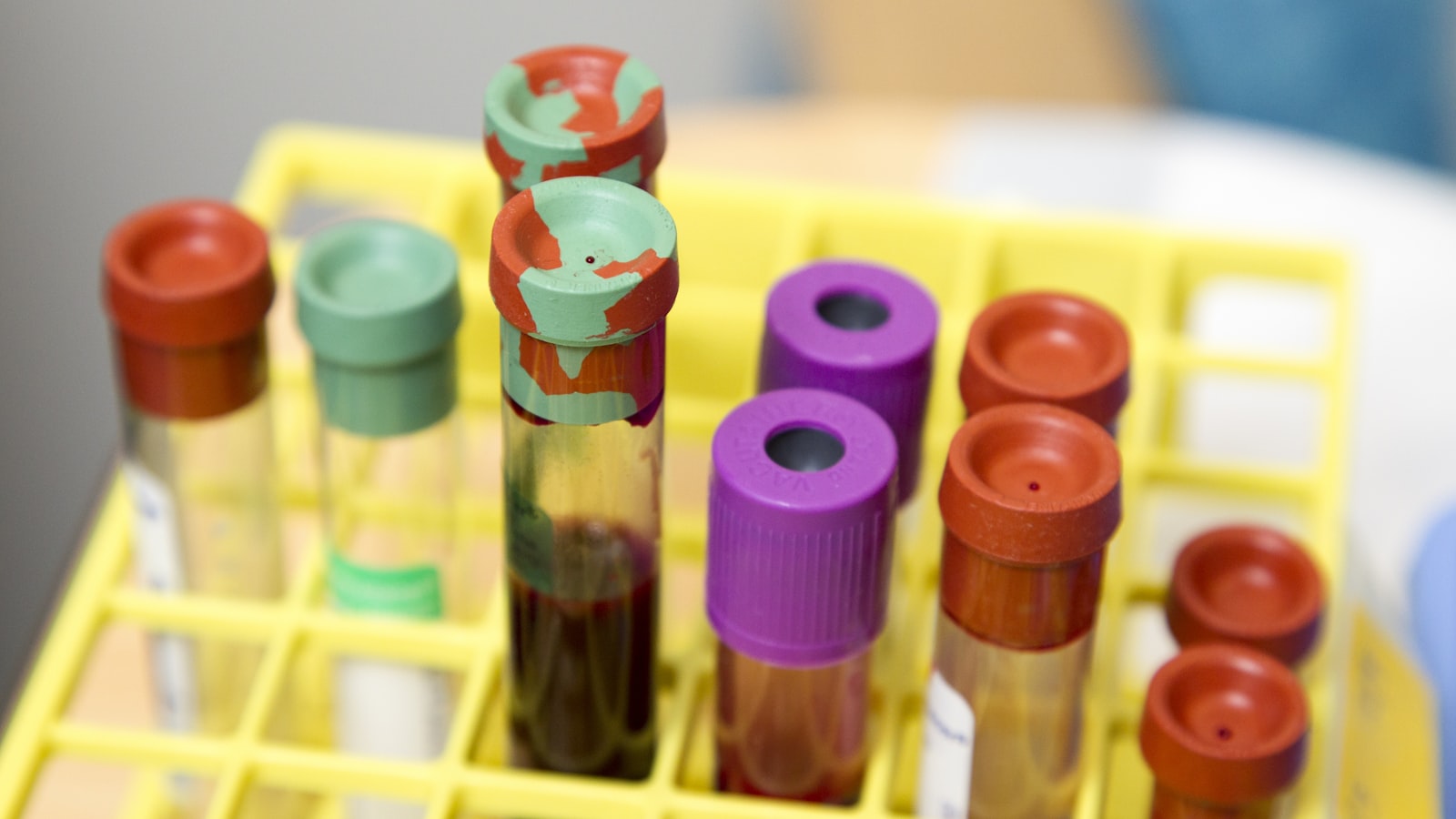
Every cell in your body has a membrane around it — like the skin around a grape. That is where I want to start, because it's the mental picture that makes the rest of this piece make sense.
Your cell membranes are not just a wrapper. They are alive. They are how your cells communicate. They are how nutrients get in. They are how signals get out. And they are made, in significant part, out of fats.
Specifically: they are made out of the fats you eat, in the exact ratios you eat them.
If you eat a lot of omega-3 fats, your cell membranes are made of omega-3 fats. If you eat mostly other kinds of fat, your cell membranes are made of those. Your body doesn't get to choose. It has to build from what you give it.
Which is why the omega-3 index — the one on your JenSkin panel — is not really about vitamins or nutrients or wellness. It is about what your cells are physically made of.
What the omega-3 index measures.
The omega-3 index is the percentage of your red blood cell membranes made of EPA and DHA — the two most important omega-3 fatty acids. It reflects your dietary omega-3 status over the last three to four months.
It is one of the most powerful long-term nutritional markers in the entire body of medicine. Unlike a serum test that shows what you ate yesterday, the omega-3 index shows what you have been eating for months.
Why this shows up in skin.
Skin cells have membranes too. Same rules.
When your omega-3 index is high, your skin cells have flexible, well-hydrated membranes. Water passes through them the way it's supposed to. Nutrients get in. Waste gets out. The barrier — the outermost layer of skin — holds together properly.
When your omega-3 index is low, those membranes become more rigid and more permeable in the wrong ways. Water evaporates out of the skin faster than it should. That's a specific medical thing called transepidermal water loss, and it is exactly what dry skin is.
I want you to sit with that for a second. When someone tells you they have dry skin, and no matter what moisturizer they use it comes back — a big part of what's happening is that their cell membranes are leaking water faster than any topical product can put it back.
You cannot fix that from the outside. You have to build better membranes. And you build better membranes by eating (or taking) more omega-3.
The other things low omega-3 shows up as.
Beyond dryness, low omega-3 has been linked to:
- More inflammation systemically. Omega-3 is a precursor to anti-inflammatory signaling molecules. Low omega-3 lets pro-inflammatory pathways dominate.
- Worse rosacea flares. Studies have specifically shown omega-3 supplementation can reduce rosacea severity and frequency.
- More sensitive skin generally. A leaky barrier means more irritants get in, and the immune system in your skin reacts more.
- Slower healing of any small skin damage.
- Higher inflammatory tone in eczema and psoriasis.
If you have any of these, and your omega-3 index has never been measured, it is very much worth measuring.
How to move it.
Fatty fish is the highest-yield food source. Salmon, sardines, mackerel, anchovies, herring. Two servings a week of a fatty fish will noticeably raise your index over a few months.
Fish oil supplementation is the fastest lever if you're not going to eat fish regularly. Look for a supplement that clearly states its EPA + DHA content (many labels say "1000 mg fish oil" while only having 300 mg of actual EPA/DHA — the rest is filler). A good target: 2 to 3 grams of combined EPA + DHA daily.
Brands I trust: Thorne EPA/DHA, Nordic Naturals ProOmega, Carlson Fish Oil. Each is third-party tested, so what's on the label is what's in the bottle.
Walnuts are the plant-based option. Alpha-linolenic acid (ALA) in walnuts is a plant precursor to EPA and DHA, but your body converts it to the real thing at maybe 5-10% efficiency. So a handful of walnuts is meaningful, but nothing like an equivalent dose of fish oil.
Re-test at 12 weeks. Omega-3 index is one of the most trackable numbers on the panel. If you supplement or shift your diet and don't re-test, you have no idea whether it worked. This is where the JenSkin loop earns its keep.
The one line to remember.
If your skin feels dry no matter what moisturizer you use — this is very often the number that would tell you why.
Your cell membranes are made out of the fats you eat. Your skin's ability to hold water depends on those membranes. Everything else is downstream of that.
You can lotion the outside all day. But you build the grape skin from the inside.