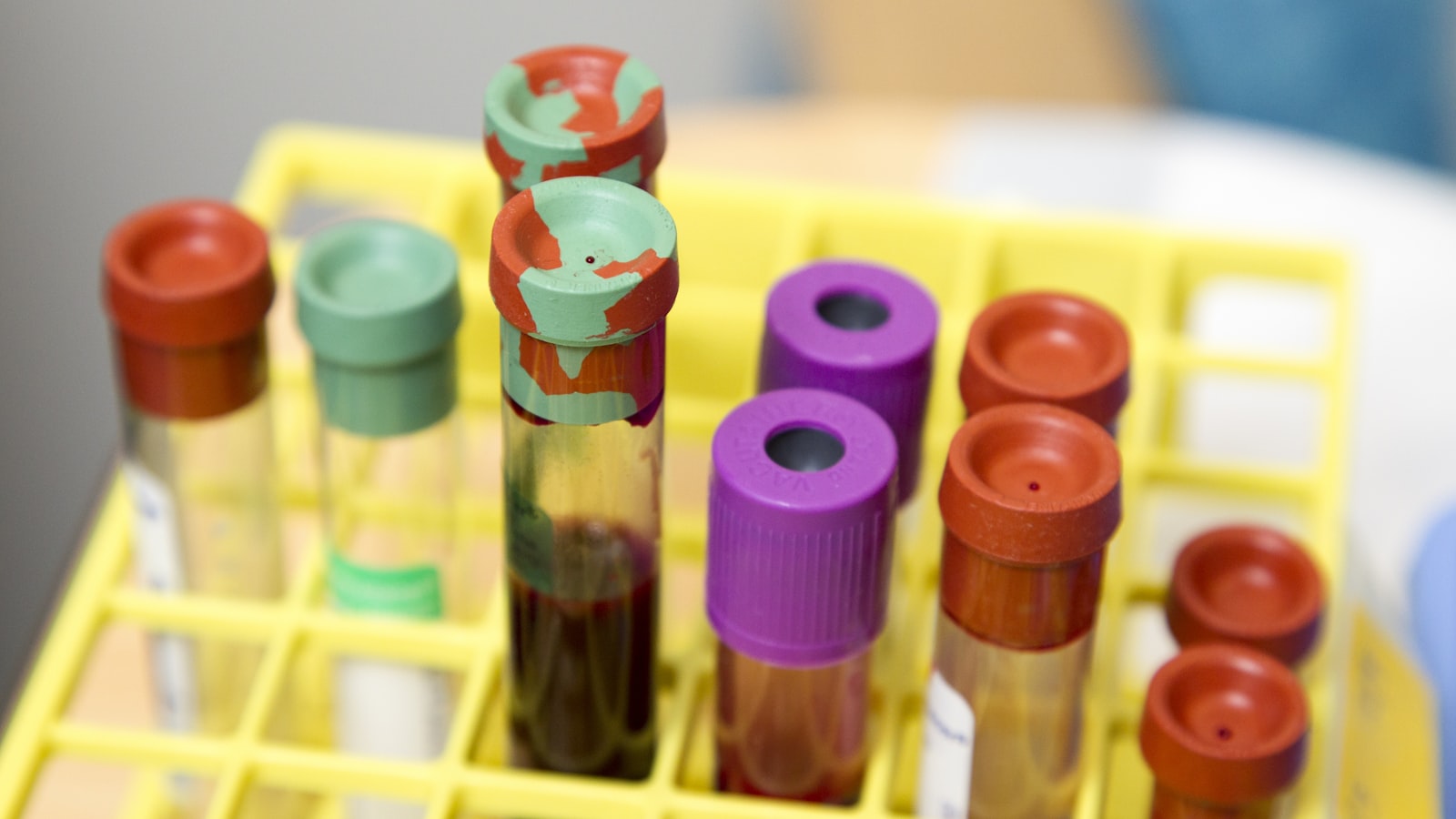
The panel is not the product. The report is.
That's a distinction we care about a lot at JenSkin, and it's the reason the piece of technology we've spent the most time building isn't a blood test. Any competent lab can run nine biomarkers. What we've built is the translation.
The problem with a standard blood report.
Ask your primary care doctor to run hsCRP, HbA1c, fasting glucose, fasting insulin, vitamin D, oxidized LDL, zinc, estradiol, and an omega-3 index. Give them the seven business days it takes. What you'll get back is a PDF.
That PDF is designed to answer one question: is this person medically sick? The reference ranges are built for that. An HbA1c of 5.9 is normal because clinically it isn't diabetes. A vitamin D of 32 is normal because clinically it isn't osteomalacia. A zinc at the low end of the range is normal because clinically it isn't a deficiency syndrome.
Those ranges were never built to answer a different question — how is this person's skin aging?
For that question, the numbers matter more, and they matter at tighter thresholds. That fact is well established in the peer-reviewed dermatology and endocrinology literature (Fisher 2002; Verdier-Sévrain 2006; Rittié & Fisher 2015). What has not existed in a single, coherent place is a translation of that literature into a form a woman can act on.
That is what we built.
The report has two layers.
Layer one is the deterministic engine. Each of your nine biomarkers is scored against skin-longevity optimized reference ranges we've compiled from the peer-reviewed literature. These ranges are tighter than clinical normal, and they are specific to skin biology — collagen synthesis, glycation kinetics, matrix metalloproteinase activation, epidermal barrier function, DNA repair after ultraviolet exposure.
Every threshold in the deterministic layer traces back to research we can cite. The scoring is fully rules-based. If your hsCRP is X, our engine will always classify it the same way — this is not machine learning, and it is not a black box. It is a carefully curated evidence base, expressed as a scoring system.
Layer two is the personalization narrative. The deterministic scoring produces a snapshot of your body chemistry, marker by marker. What it does not produce is a narrative. Nine numbers, even correctly scored, don't tell you what to do first. They don't tell you which marker is upstream of which. They don't tell you what is likely happening in your skin as a result. And they don't tell you it in a voice you would actually want to read.
For that, we built a personalization layer that takes your specific pattern of results and generates a written report that reads like a patient, science-fluent friend sat down and walked you through it. Every report is generated for that specific woman, based on that specific combination of nine values, at that specific stage of life.
The personalization layer is grounded in our own curated corpus of skin-biology literature and internal editorial standards. It does not hallucinate biomarker facts because the deterministic layer supplies them upstream. What it does is say those facts in a way that is actually useful.
Then a human reads it too.
Every JenSkin report is reviewed by a member of our research team before it goes out.
And every panel comes with a walkthrough conversation. A real person taking a woman through her results in her own words, answering her actual questions, translating the priorities into things she can start on tomorrow.
That walkthrough is not automated. It's the piece our early customers have told us, over and over, is the most valuable part of the whole panel.
The panel is the raw material. The report is the translation. The walkthrough is the closer.
On what we're asked about "validation."
We get a fair question sometimes: is the composite JenSkin report scientifically validated?
Here is the honest answer, in two parts.
The individual biomarkers are validated. Each of the nine markers in our panel has a peer-reviewed literature base connecting it to specific mechanisms of skin aging. hsCRP and inflammation-driven MMP activity. HbA1c and non-enzymatic glycation cross-linking of dermal collagen (Monnier 1990). Vitamin D and skin DNA repair after UV exposure. Zinc as a required cofactor for collagen synthesis and wound healing. Estradiol and dermal collagen thickness (Brincat 1983; Verdier-Sévrain 2006). Omega-3 index and epidermal barrier function (Pilkington 2011). Fasting glucose, fasting insulin, and oxidized LDL — each one is peer-reviewed for its role in skin biology. This is not our claim. It is the literature.
The composite report is proprietary. The way our system integrates nine markers into a personalized narrative has not been through an external randomized clinical validation trial, and we do not claim otherwise. What it has been through is careful construction against the underlying evidence base, hundreds of hours of editorial and clinical review, and the observed reaction of every early customer who has read hers.
We are open about this because the alternative — pretending the composite report has been validated the way a drug is — would be dishonest. What we can say honestly is that every recommendation in your report is grounded in cited research on the biomarker it comes from, and that we do not guess.
Why we don't publish the exact thresholds.
We are also sometimes asked why we don't just publish the specific reference ranges we use for each marker.
The short answer is that the thresholds are the product. Two years of dermatology and endocrinology and metabolic-health literature synthesis went into deciding what skin-optimized means for each of the nine markers. That work is what a woman is paying for when she buys the panel.
When you get your JenSkin report, every marker is placed on a visible range with a clear score. The information you need to act on your own results is transparent to you. What we do not publish is the underlying thresholds, because the thresholds themselves are the two years of work.
The frame.
Nine biomarkers are the raw material. The reference ranges we built are the lens. The two-layer report is the translation. A real conversation with our research team is the thing that closes the loop.
That is what we sell.
Not a blood test.
References.
- Fisher GJ et al. "Mechanisms of photoaging and chronological skin aging." Archives of Dermatology. 2002;138(11):1462-1470.
- Monnier VM. "Nonenzymatic glycosylation, the Maillard reaction and the aging process." Journal of Gerontology. 1990;45(4):B105-B111.
- Brincat M et al. "Sex hormones and skin collagen content in postmenopausal women." British Medical Journal. 1983;287(6402):1337-1338.
- Verdier-Sévrain S et al. "Biology of estrogens in skin: implications for skin aging." Experimental Dermatology. 2006;15(2):83-94.
- Pilkington SM et al. "Omega-3 polyunsaturated fatty acids: photoprotective macronutrients." Experimental Dermatology. 2011;20(7):537-543.
- Rittié L, Fisher GJ. "Natural and sun-induced aging of human skin." Cold Spring Harbor Perspectives in Medicine. 2015;5(1):a015370.
- Selvin E et al. "Glycated hemoglobin, diabetes, and cardiovascular risk in nondiabetic adults." New England Journal of Medicine. 2010;362(9):800-811.
- Rizwan M et al. "Diet and skin aging — from the perspective of food nutrition." British Journal of Dermatology. 2011;165(2):257-266.