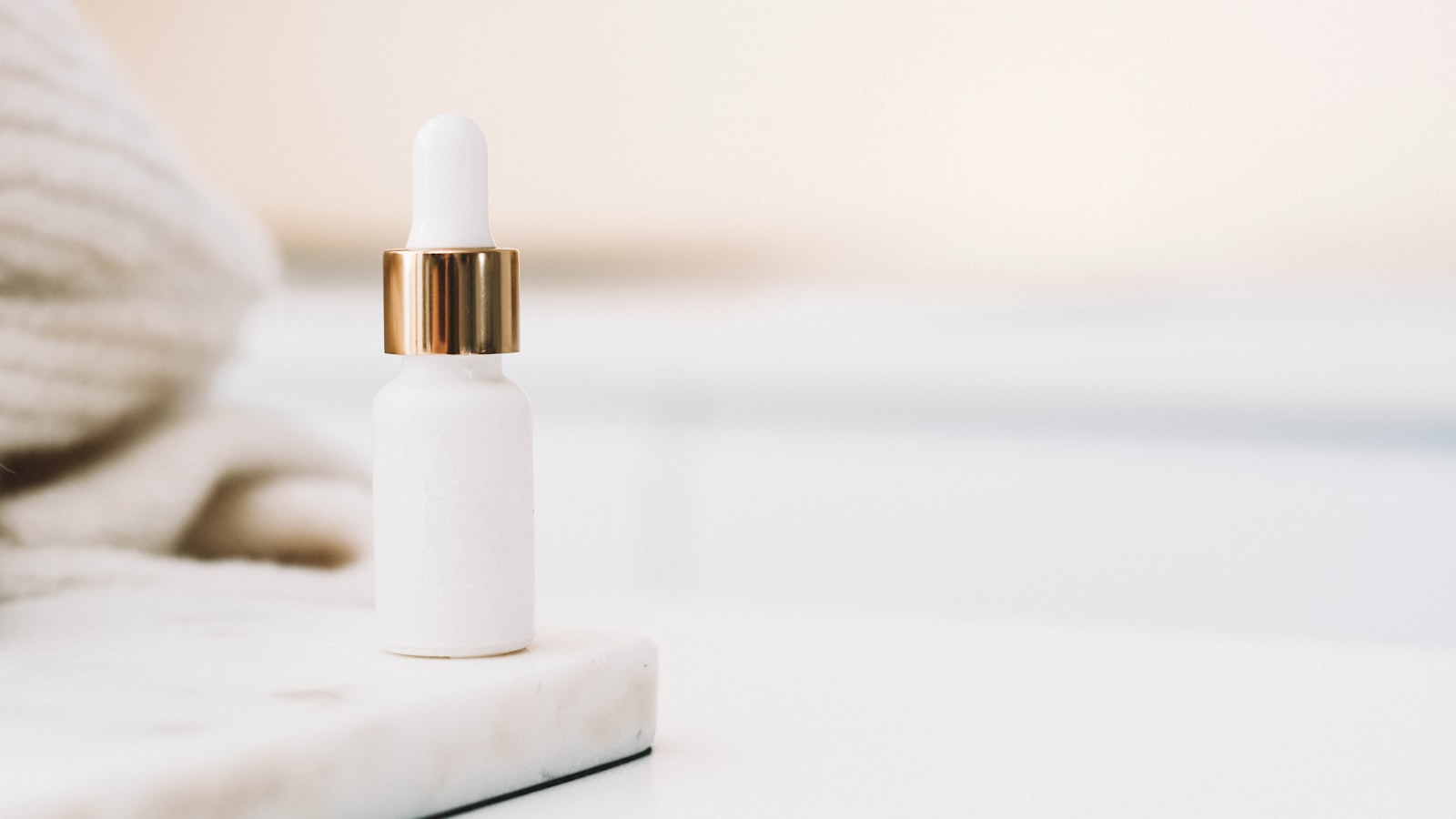
Peptides are the ingredient of the moment, marketed as the kinder way to build collagen without the redness and peeling of retinol. For once the hype has decent evidence behind it. It just doesn't tell the whole story.
What peptides actually do.
The best-studied cosmetic peptides, the ones in products like Matrixyl, are signal peptides. They imitate the fragments your body releases when collagen breaks down, which tells your fibroblasts to make more. In a controlled trial, a low concentration improved photoaged skin over twelve weeks with no irritation (Robinson, 2005). Some head-to-head work has even put peptides close to retinol on measures like skin thickness, and gentler getting there.
So peptides aren't snake oil. If your skin can't tolerate retinoids, they're a reasonable, evidence-backed choice.
The ceiling.
Here's the part the marketing skips. A peptide sends a signal to build. It does nothing about what's tearing collagen down in the first place.
You can ask your fibroblasts to build all day. If the environment stays hostile, you're repairing a wall while the flood keeps coming.
Two forces work against your collagen no matter what serum you use. Glycation, driven by blood sugar, stiffens and cross-links the collagen you already have (Gkogkolou & Böhm, 2012). Chronic inflammation switches on the enzymes that dismantle it. A peptide can't reach either one. It's working on the surface while the demolition happens deeper, driven from the inside.
The order that works.
None of this means skip peptides. It's about sequence. Settle the upstream drivers first, the glycation and inflammation you can actually measure, and then the collagen you're signaling for has stable ground to land on. Skip that step, and you're paying a premium to build on something that keeps giving way.
The markers that describe that ground are the familiar ones: HbA1c and glucose for glycation, hs-CRP for inflammation.
A note: the JenSkin panel is a wellness tool, not a diagnostic test. It is meant to help you understand what may be influencing your skin — not to diagnose or treat any condition. For medical concerns, talk to your physician.