I want to tell you what almost stopped me from building this.
The first time I really listened to how longevity people talked about their days, I heard someone lay out a morning routine that included seven supplements, a red-light face mask, forty-five minutes of Zone 2 cardio, an ice bath, and something called "tracking my heart rate variability."
He was thirty-six. No kids. Worked out of a home office. Very kind, and I don't doubt he felt great.
I remember thinking: I have two kids. My morning routine is finding one shoe.
I could not have felt more like I was in the wrong room.
And here's the thing — I was interested in the science. I was curious about longevity. I did want to understand my body better than I did. But everything about that world seemed to require a lot of money, a lot of time, a lot of gadgets, and a very specific kind of person willing to build their whole life around them.
I looked around and thought: if this is what taking care of yourself is supposed to look like now, I am out.
Curiosity is not the same as optimization.
That's the sentence I wrote down in my notes app the day I decided to build JenSkin.
Because there was something in that world I actually wanted — the information. I wanted to know what was going on in my body. I wanted to understand why my skin was doing what it was doing. I wanted to make decisions from data instead of from marketing.
But I did not want to become one of those people.
I did not want to wear a ring that grades my sleep. I did not want to fast until noon because a podcast host suggested it. I did not want to spend the next fifteen years of my life trying to squeeze another 3% out of my morning cortisol.
I just wanted to understand what my body was telling me.
And I couldn't find a way to do that that didn't come with a monthly membership, an app, and a subtle judgment that if I wasn't tracking, I wasn't trying.
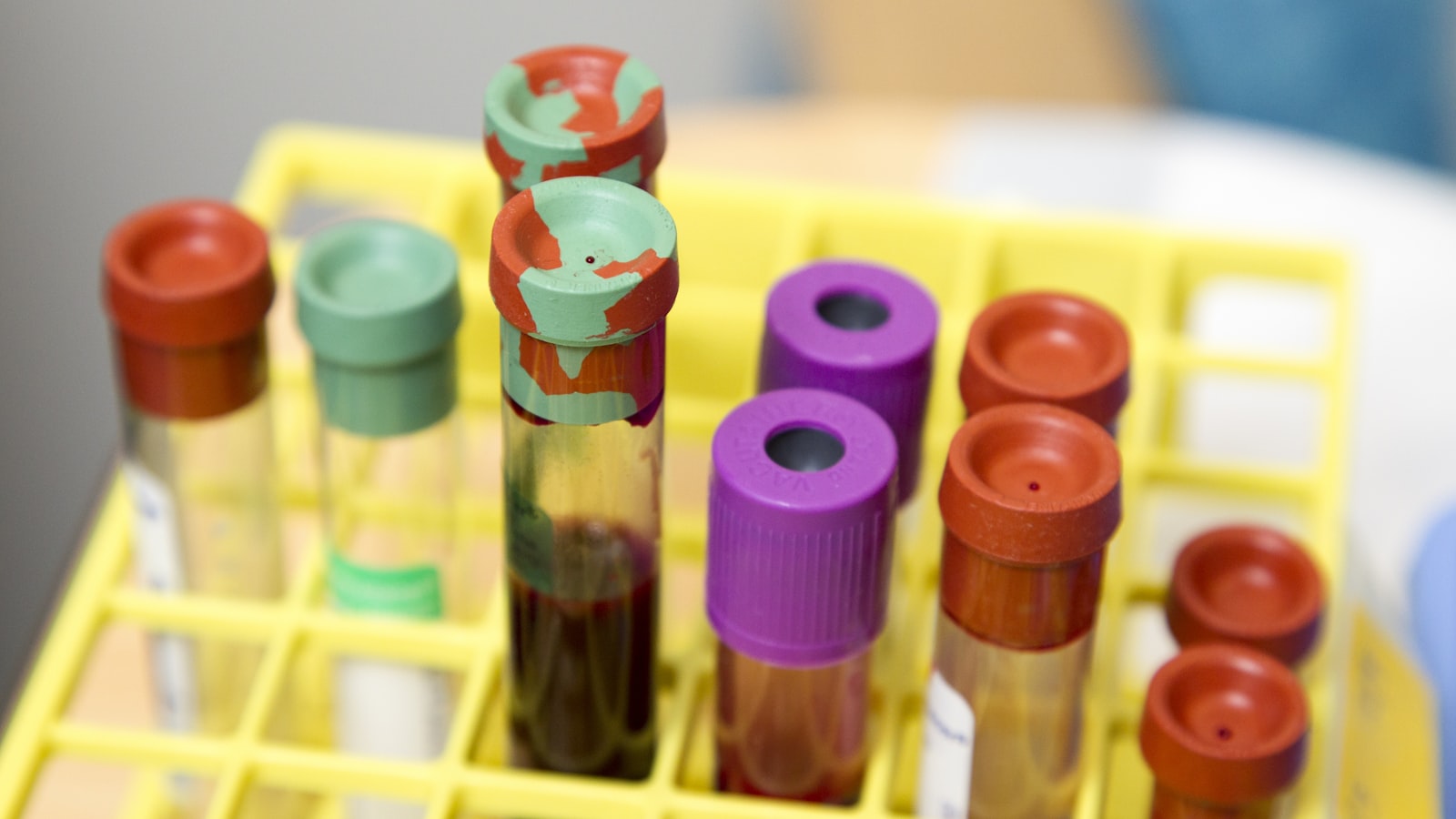
So I decided the panel would be a one-time thing.
That's the whole frame.
You do it once. You get a report that tells you what's actually going on. If something in the report is worth acting on, you act on it — food, a supplement, a conversation with your doctor, sleep, whatever. Then in three or four months, if you want to know whether the thing you changed changed the number, you can do it again.
You are not a subscriber. You are not part of an ecosystem. You are not being nudged, tracked, gamified, or optimized.
You get information, once, from a blood draw at a Quest lab that's five minutes from your house.
That's it.
I built the thing I would have wanted back then. A version of "taking care of yourself" that fits inside a real life.
Who I actually think about when I build this.
I think about my friends. Women in their thirties and forties who are running households, careers, kids, and everyone else's mental load, and don't have another forty-five minutes for a wellness ritual. They just want to know what's happening and what to do about it.
I think about my mother, and my mother-in-law, and their friends — women in their fifties, sixties, and seventies who have been told for decades that their body is a project, and who are quietly done with that framing. They want information, not a project.
I think about the woman who has spent three thousand dollars on lasers and serums and does not have a single number to show for it. I think about the woman whose dermatologist has never checked her hormones. I think about the woman who isn't sure whether the thing on her jawline is inflammation, or hormones, or stress, or a bad pillowcase.
I am building this for her.
The panel isn't the point.
I want to be honest about this too.
The nine biomarkers are not the point. The blood draw is not the point. Even the report is not the point.
The point is knowing.
Knowing what your body is doing so you can stop guessing. Knowing what's actually driving the thing you keep noticing in the mirror so you can stop trying random things. Knowing enough about your own biology that you can walk into a Sephora, a dermatologist's office, or the vitamin aisle at CVS, and know what you're looking at.
I don't care if you take your numbers, make one small change, and never think about your biology again for six months. That is the correct amount of thinking about it. That is how real people live.
I just want you to know.